
Life can get overwhelming sometimes, can’t it?
Between work, relationships, responsibilities, and the constant pressure to do more, it’s easy to feel like you’re always chasing something. More success. More happiness. More approval. More time to finally enjoy your life.
And somewhere in that endless pursuit, we forget something important: peace isn’t always about changing our circumstances. Sometimes, it’s about changing the way we see them.
You don’t need a perfect life to experience beautiful moments. You don’t need everyone’s approval to feel confident. And you certainly don’t need to accomplish everything on your to-do list before you’re allowed to rest.
Sometimes, the simplest reminders can make the biggest difference.
These 25 life truths are gentle invitations to slow down, release unnecessary pressure, appreciate what you already have, and develop a kinder relationship with yourself.
You don’t have to embrace all of them at once. Just start with the one that speaks to you today.
Why Finding Inner Peace Starts With Changing Your Perspective
We often imagine inner peace as something we’ll experience once everything falls into place.
Once we get the promotion. Once our finances improve. Once our relationships become easier. Once life finally settles down.
But life rarely stays settled for long.
There will always be unexpected challenges, changing priorities, difficult emotions, and things beyond our control.
That doesn’t mean peace is impossible.
Inner peace isn’t the absence of problems. It’s developing a healthier relationship with yourself and the uncertainties of life.
It means learning when to push forward and when to rest. When to hold on and when to let go. When to listen to others and when to trust your own judgment.
Most importantly, it means understanding that happiness and contentment don’t require perfection.
Let’s explore 25 life truths that can help you approach everyday life with greater calm, confidence, and appreciation.
Part 1: Finding Peace Within Yourself
Before we can feel genuinely peaceful about the world around us, it helps to examine the expectations we place on ourselves.
These first five truths challenge the pressure to constantly perform, prove ourselves, and keep up with everyone else.
1. You Don’t Have to Earn Rest
Somewhere along the way, we started treating rest like a reward.
Finish your work. Clear your inbox. Complete your to-do list. Then, and only then, you’re allowed to relax.
But here’s something worth remembering: You don’t need to exhaust yourself to deserve a break.
Rest is a normal part of taking care of yourself. You can work hard, chase your dreams, and still make time to slow down without feeling guilty.
In fact, constantly pushing yourself without adequate breaks can leave you exhausted, irritable, and less able to enjoy the things you’re working toward.
Think about how often you’ve postponed relaxation because there was still something left to do.
The truth is, there will almost always be something left to do.
Your responsibilities matter, but so does your well-being.
Try this today: Set aside 15 minutes to do absolutely nothing work-related. Enjoy your coffee, sit outside, or listen to music. Give yourself permission to rest without needing to justify it.
Remember: Your value isn’t measured by how busy you are.
2. True Confidence Doesn’t Need to Be Loud
We often associate confidence with people who command attention.
The person who speaks the loudest, dominates conversations, or seems completely comfortable being the center of attention.
But genuine confidence doesn’t always look like that.
Sometimes, it’s the quiet person who knows their values and doesn’t feel compelled to prove anything.
True confidence comes from knowing who you are, even when nobody is applauding.
It’s being comfortable with your decisions without constantly seeking reassurance.
It’s being able to admit you’re wrong without feeling that your entire identity is threatened.
It’s choosing a path that feels right for you, even when others don’t understand it.
You don’t have to win every argument, impress every stranger, or make everyone admire you.
The more comfortable you become with yourself, the less energy you need to spend proving your worth.
Try this today: Think about one decision you’ve been hesitating to make because you’re worried about other people’s opinions. Ask yourself what you would choose if nobody were watching.
Remember: Quiet confidence is still confidence.
3. You Don’t Need Everyone’s Approval
Have you ever rewritten a message several times because you were worried about how someone might interpret it?
Or agreed to something you didn’t want to do simply because you didn’t want to disappoint anyone?
Most of us want to feel accepted. There’s nothing wrong with that.
The problem begins when other people’s approval becomes the deciding factor in nearly everything we do.
You might start questioning your choices, hiding your opinions, or abandoning your preferences to make others comfortable.
And that can be exhausting.
You can appreciate other people’s opinions without allowing them to determine your self-worth.
Not everyone will agree with you. Not everyone will understand your decisions. And not everyone will like you.
That’s part of being human.
The goal isn’t to stop caring about others. It’s to develop enough self-trust that disagreement doesn’t automatically make you question your value.
Try this today: Make one small decision based entirely on your own preferences. It could be what you wear, how you spend your free time, or which personal goal you pursue.
Remember: You can respect someone’s opinion without needing their permission.
4. You Are Not Behind in Life

Social media has made comparing our lives with other people’s achievements almost effortless.
Someone bought their dream home. Someone started a successful business. Someone is traveling the world. Someone seems to have everything figured out.
And suddenly, your perfectly ordinary Tuesday feels inadequate.
But here’s what we often forget.
Everyone is living a different life, with different circumstances, opportunities, responsibilities, and priorities.
There’s no universal schedule for success.
Some people discover their passion early. Others find it much later.
Some build families, some pursue careers, some change directions completely, and some spend years figuring out what matters most.
None of these journeys automatically makes someone more successful or fulfilled than another person.
Besides, the glimpses we see of other people’s lives rarely tell the complete story.
Instead of measuring your progress against someone else’s highlights, look at how far you’ve come.
Your journey deserves to be appreciated on its own terms.
Try this today: Write down three ways you’ve grown over the past year. Focus on personal progress rather than achievements you can compare with others.
Remember: You’re not late to your own life.
5. Your Worth Is More Than Your Productivity
Some days, you wake up energized and accomplish everything you planned.
Other days, even ordinary responsibilities feel difficult.
That’s life.
Yet many of us judge ourselves harshly whenever we aren’t operating at maximum productivity.
We measure our days by completed tasks, answered emails, and crossed-off goals.
But being productive is something you do. It isn’t everything you are.
You’re also a friend, a family member, a person with interests, feelings, memories, and qualities that have nothing to do with your output.
Your kindness matters. Your creativity matters. Your ability to listen, care, learn, and connect matters.
Even on days when you accomplish very little, those parts of you still exist.
Of course, responsibilities don’t disappear simply because you’re tired. But you can approach them without turning every unfinished task into a judgment about yourself.
Try this today: Before going to bed, acknowledge one thing you appreciate about yourself that has nothing to do with work or achievement.
Remember: A less productive day doesn’t make you a less valuable person.
Part 2: Letting Go of What Weighs You Down
Sometimes, finding peace has less to do with adding something new to your life and more to do with releasing what no longer serves you.
Old expectations, outdated goals, unhealthy obligations, and the need to please everyone can quietly consume enormous amounts of energy.
These next five truths are about giving yourself permission to let go.
6. You Are Allowed to Change Your Mind
Have you ever continued pursuing something simply because you’d already invested so much time in it?
Maybe it was a career path, a personal project, a goal, or even a belief you’d held for years.
You might have thought, “I’ve already come this far. I can’t change direction now.”
But here’s the thing.
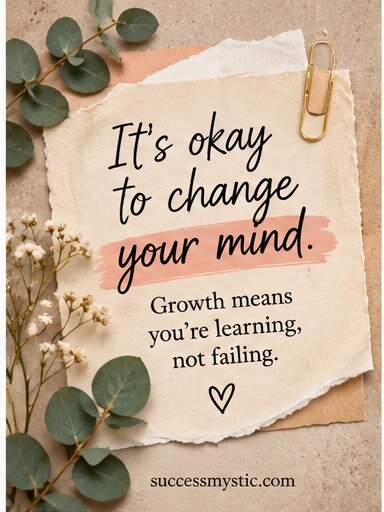
Changing your mind doesn’t automatically mean you’ve failed. Sometimes, it means you’ve learned something important.
As you grow, your priorities may change.
The dream you had five years ago might not reflect the person you are today.
And that’s okay.
You can appreciate the effort you’ve already invested while recognizing that a different direction may now make more sense.
Past effort isn’t always a reason to keep going.
Sometimes, the wisest choice is to take what you’ve learned and move forward differently.
Try this today: Think about a commitment you’ve been questioning. Ask yourself, “If I were making this decision for the first time today, would I still choose it?”
Remember: You’re allowed to grow beyond your old plans.
7. You’re Allowed to Outgrow People, Places, and Old Versions of Yourself
Growth is a wonderful thing, but it isn’t always comfortable.
As you develop new interests, priorities, and perspectives, certain parts of your life may begin to feel different.
Friendships may change. Familiar places may no longer feel like home. Habits that once made sense might stop supporting the person you’re becoming.
And sometimes, accepting those changes can feel surprisingly difficult.
We often hold on because something has been part of our lives for a long time.
But something can have been meaningful in your past without needing to remain unchanged in your future.
Outgrowing a situation doesn’t mean you have to dismiss its importance.
You can appreciate an old friendship while acknowledging that you’ve grown apart.
You can feel grateful for a previous chapter while being ready for something new.
Growth doesn’t require rejecting everything that came before.
It simply means allowing your life to evolve.
Try this today: Identify one habit, expectation, or commitment that no longer fits your current priorities. Consider one small adjustment you could make.
Remember: You can honor your past without remaining stuck in it.
8. Saying No Is a Healthy Part of Protecting Your Peace
For such a short word, “no” can be surprisingly difficult to say.
We worry about disappointing people, appearing selfish, or damaging relationships.
So we agree to commitments we don’t have time for, offer help when we’re already overwhelmed, and stretch ourselves thinner than we should.
Eventually, resentment and exhaustion begin to build.
That’s why boundaries matter.
Saying no to something doesn’t automatically mean you’re being unkind. Sometimes, it means you’re being realistic about your limits.
You can care about someone and still be unavailable.
You can appreciate an invitation and still decline it.
You can support a friend without taking responsibility for solving every problem they face.
Healthy boundaries help you manage your time and energy while maintaining more balanced relationships.
And the more you practice communicating them respectfully, the easier it can become.
Try this today: The next time you’re asked to take on something you cannot reasonably manage, respond with a simple, polite refusal instead of automatically agreeing.
Remember: You don’t need an elaborate excuse to have a reasonable boundary.
9. Not Everyone Will Understand Your Path, and That’s Okay
Imagine sharing an exciting new goal with someone you care about, only to receive skepticism instead of encouragement.
It can be disappointing.
We naturally want the people closest to us to understand our choices and support our ambitions.
But everyone views life through their own experiences, fears, expectations, and priorities.
What feels meaningful to you may not make sense to someone else.
Other people’s uncertainty about your path doesn’t automatically mean you’re on the wrong one.
Of course, thoughtful feedback can be valuable. Sometimes, people notice risks or possibilities we’ve overlooked.
The important distinction is between listening to useful advice and surrendering your decisions entirely to other people’s expectations.
You can consider another perspective while still choosing what aligns with your values.
And you can accept that some people may never fully understand your reasoning.
Try this today: Write down why one of your personal goals matters to you. Focus on your reasons rather than how impressive the goal might appear to others.
Remember: Your life doesn’t need to make perfect sense to everyone else.
10. Peace Often Comes From Letting Go
Holding on can feel strangely comforting, even when what we’re holding on to is painful.
An old argument. A disappointment. A mistake. Something someone said years ago.
We replay these experiences, imagining what we should have done differently or what we wish the other person had understood.
But revisiting the same painful memory doesn’t always bring us closer to resolving it.
Sometimes, it simply keeps us emotionally attached to something we cannot change.
Letting go doesn’t mean pretending something never happened.
It doesn’t mean excusing harmful behavior or abandoning necessary boundaries.
It means gradually reducing the power that an old experience has over your present life.
That process can take time, particularly when the experience involves significant hurt or loss.
You don’t need to force forgiveness or rush your feelings.
You can begin by acknowledging what happened, recognizing how it affected you, and deciding what you need to move forward.
Try this today: Write about something you’ve been struggling to release. Focus on what remains within your control rather than what you wish you could change about the past.
Remember: You can acknowledge the past without allowing it to control every part of your present.
Part 3: Finding Joy in Everyday Life
It’s easy to believe that happiness lives somewhere in the future.
In the next achievement, the next vacation, the next purchase, or the next exciting milestone.
But some of life’s most meaningful experiences happen in the ordinary moments we barely notice.
These five truths remind us to appreciate the life that’s happening right now.
11. Every Day Is a Fresh Start
We’ve all had days we’d rather forget.
Maybe you made a mistake, lost your patience, missed an opportunity, or simply didn’t accomplish what you’d hoped.
And sometimes, those disappointments follow us into the next morning.
We wake up already criticizing ourselves for yesterday.
But here’s a gentler way to look at things.
Yesterday can teach you something without determining how you approach today.
A new day doesn’t erase past consequences or make difficult feelings disappear.
What it does offer is another opportunity to make choices.
You can apologize. Try again. Change your approach. Take a small step toward something important.
You don’t need to reinvent your entire life every morning.
Sometimes, a fresh start is simply deciding that one difficult day doesn’t have to become a difficult week.
Try this today: Choose one small thing you’d like to do differently from yesterday. Keep it manageable and focus on the next step.
Remember: You can begin again without starting from zero.
12. Joy Isn’t Found in Perfection, but in Being Present

Perfection can be an exhausting goal.
There’s always something to improve, organize, accomplish, or fix.
The house could be cleaner. The project could be better. The weekend could be more exciting.
And when we’re constantly focused on what could be improved, we can miss what’s already enjoyable.
Think about a simple moment, like having coffee with someone you love.
If you’re distracted by your phone or worrying about tomorrow, you might barely notice the conversation.
But when you’re fully present, an ordinary experience can become meaningful.
You don’t need everything to be perfect before you’re allowed to enjoy it.
There will always be unfinished tasks and imperfect circumstances.
The challenge is learning to notice the good things that exist alongside them.
Being present doesn’t mean ignoring your goals. It means not postponing every moment of happiness until those goals are achieved.
Try this today: Choose one everyday activity and give it your full attention. Put your phone away, slow down, and notice the experience.
Remember: A beautiful moment doesn’t need a perfect setting.
13. Small Moments Make Life Rich

When we think about a wonderful life, we often imagine extraordinary experiences.
Big celebrations. Dream vacations. Important milestones. Once-in-a-lifetime achievements.
And those experiences can certainly be meaningful.
But most of our lives aren’t made up of extraordinary events.
They’re made up of ordinary mornings, familiar routines, conversations, meals, and quiet evenings.
If we only appreciate the big moments, we overlook much of the life we’re actually living.
A warm cup of coffee. A familiar song. A funny conversation. The smell of rain. A peaceful walk.
These experiences might seem insignificant on their own.
But together, they create the texture of everyday life.
Learning to notice them doesn’t require pretending that everything is wonderful.
It simply means making room to appreciate what is good, even during imperfect seasons.
Try this today: Before bed, write down three small moments you enjoyed. They don’t need to be impressive or unusual.
Remember: A rich life is often built from ordinary moments that receive our attention.
14. You Can Be Grateful and Still Want More
Sometimes, we feel guilty for wanting something different.
We look at what we already have and tell ourselves we should simply be satisfied.
After all, there are things to appreciate.
Maybe you have a supportive family, a comfortable home, meaningful friendships, or opportunities you’ve worked hard to create.
Does wanting more mean you’re ungrateful?
Not necessarily.
Gratitude and ambition can exist together.
You can appreciate your current job while hoping to pursue a different career.
You can love your home while dreaming of living somewhere new.
You can feel proud of your progress while recognizing that you still have goals.
The key is to avoid making your happiness entirely dependent on reaching the next milestone.
Growth can be exciting without turning your present circumstances into something you constantly criticize.
Try this today: Write down one thing you’re grateful for and one thing you’re working toward. Give both equal space.
Remember: Appreciating what you have doesn’t mean you must stop growing.
15. Contentment Isn’t About Having More, but Needing Less
Have you ever wanted something so badly that you were convinced it would make you happier?
Then you finally got it.
For a while, it felt wonderful.
But eventually, the excitement faded, and something else caught your attention.
It’s easy to fall into a cycle of constantly chasing the next thing.
There’s nothing inherently wrong with enjoying material comforts or pursuing financial goals.
The problem arises when we expect every new purchase or achievement to create lasting satisfaction.
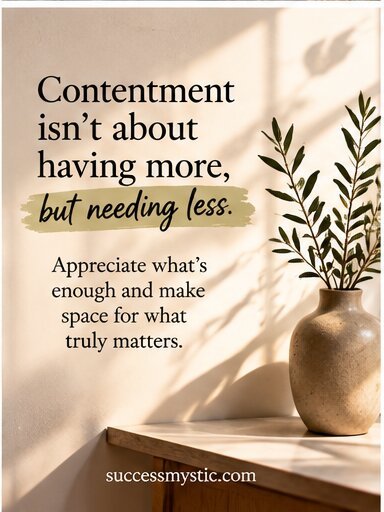
Contentment becomes easier when we appreciate what is already enough.
That might mean recognizing the value of meaningful relationships, safety, health, time, or simple daily comforts.
It can also mean questioning whether every new desire deserves our energy and attention.
You don’t have to abandon ambition or live without nice things.
You can simply become more intentional about what genuinely adds value to your life.
Try this today: Before buying something you don’t need, ask yourself whether it will meaningfully improve your life or simply provide a temporary burst of excitement.
Remember: Having enough can feel more satisfying than endlessly chasing more.
Part 4: Building a Healthier Relationship With Yourself
The way you speak to yourself matters.
Your internal conversations influence how you interpret mistakes, handle disappointment, make decisions, and respond to challenges.
These next five truths focus on developing a more compassionate and respectful relationship with yourself.
16. Your Emotions Don’t Define Who You Are
We’ve all experienced emotions that seem to take over everything.
Anger after an argument. Anxiety before an important decision. Sadness following a disappointment.
In those moments, it’s easy to confuse what we’re feeling with who we are.
But experiencing an emotion doesn’t mean that emotion defines your entire identity.
Feeling anxious doesn’t mean you’re incapable of courage.
Feeling angry doesn’t mean you’re an angry person.
Feeling discouraged doesn’t mean you’re destined to fail.
Emotions can provide useful information about our needs, concerns, experiences, and circumstances.
But they aren’t always accurate descriptions of reality, and they don’t need to dictate every decision we make.
Instead of judging yourself for having difficult feelings, try becoming curious about them.
What happened? What might you need? What would help you respond thoughtfully?
Some emotions may persist or require additional support, and that’s okay too.
Try this today: When a strong emotion appears, describe it as something you’re experiencing rather than something you are. For example, “I’m feeling anxious right now” instead of “I’m an anxious person.”
Remember: Your feelings are part of your experience, not your entire identity.
17. Be as Kind to Yourself as You Are to Others

Imagine a close friend telling you they made a mistake.
Would you immediately call them a failure?
Would you remind them of every other mistake they’ve ever made?
Probably not.
You’d likely listen, offer encouragement, and help them see the situation with some perspective.
Yet when we make mistakes ourselves, our internal conversations can be remarkably harsh.
We criticize our decisions, question our abilities, and dwell on things we cannot change.
You deserve the same basic kindness you offer the people you care about.
Self-compassion doesn’t mean avoiding responsibility or pretending every decision was perfect.
It means acknowledging mistakes without turning them into attacks on your character.
You can recognize that you handled something poorly and still believe you’re capable of learning.
You can be disappointed in yourself without being cruel to yourself.
Try this today: Notice one critical thought you have about yourself. Rewrite it as something you’d say to a friend facing the same situation.
Remember: You can hold yourself accountable without tearing yourself down.
18. Learning to Validate Yourself Is Powerful
Compliments feel good.
Being recognized for your efforts, appreciated by someone you love, or praised for your achievements can be deeply encouraging.
There’s nothing wrong with enjoying that recognition.
But problems can arise when you rely entirely on other people to confirm that your feelings, choices, or accomplishments matter.
What happens when the compliment doesn’t come?
What happens when someone disagrees with a decision you feel good about?
Self-validation means learning to acknowledge your own experiences without always needing someone else to confirm them.
You can recognize that you worked hard, even if nobody notices.
You can acknowledge that something hurt your feelings, even if another person sees the situation differently.
You can appreciate your own progress without waiting for applause.
This doesn’t mean rejecting feedback or assuming you’re always right.
It means developing a stronger internal foundation while remaining open to learning.
Try this today: Identify one accomplishment or personal quality you genuinely appreciate. Acknowledge it without minimizing it or comparing it with anyone else’s.
Remember: Recognition from others is meaningful, but it doesn’t have to be your only source of confidence.
19. The Way You Treat Yourself Helps Set Your Boundaries
The relationship you have with yourself influences many of the choices you make in your relationships with others.
When you recognize your needs and values, it can become easier to communicate them.
When you respect your time, you may find it easier to decline unreasonable demands.
And when you believe you deserve respectful treatment, you may become more willing to address behavior that crosses your boundaries.
Self-respect helps you establish the standards you want to maintain in your relationships.
Of course, another person’s disrespectful behavior is their responsibility. It isn’t caused or justified by how you feel about yourself.
You cannot control how everyone treats you.
But you can decide what behavior you’re willing to accept, how you’ll communicate your needs, and when it may be necessary to create distance.
Treating yourself well is not about becoming demanding or expecting perfection from others.
It’s about recognizing that your feelings, time, and well-being deserve consideration.
Try this today: Think about one situation where you’ve been ignoring your own needs to avoid discomfort. Consider how you could communicate a reasonable boundary.
Remember: Respecting yourself helps you make more intentional choices about your relationships.
20. You’re Doing Better Than You Think
It’s surprisingly easy to overlook our own progress.
We focus on unfinished goals, missed opportunities, and the things we wish we’d handled differently.
Meanwhile, we barely acknowledge the challenges we’ve already overcome.
Maybe you’ve learned to manage a difficult situation more calmly.
Maybe you’ve become better at communicating.
Maybe you’ve continued showing up during a season when life felt especially demanding.
Those things matter.
Progress isn’t always dramatic, visible, or easy to measure.
Sometimes, progress looks like making a healthier decision.
Sometimes, it’s asking for help.
Sometimes, it’s recognizing an old pattern before repeating it.
And sometimes, it’s simply continuing to move forward when things are difficult.
You don’t need to exaggerate your achievements or pretend everything is going wonderfully.
Just try to give yourself a fair assessment.
You may discover that you’ve grown in ways you haven’t stopped to appreciate.
Try this today: Think about something that was difficult for you a year ago. Notice whether your understanding, confidence, or ability to handle it has changed.
Remember: Don’t overlook the progress that happens quietly.
Part 5: Accepting Life as It Is
Life doesn’t always follow the plans we make.
Relationships can be complicated. Loss and happiness can exist together. The future can feel uncertain.
These final five truths encourage us to make peace with life’s complexity rather than expecting everything to be simple or predictable.
21. Someone Can Love You and Still Not Be Right for You
Love is important in a relationship, but love alone doesn’t guarantee compatibility.
Two people can care deeply about each other while having very different priorities, expectations, or ways of communicating.
They may want different futures.
They may struggle to meet each other’s emotional needs.
Or they may discover that the relationship isn’t healthy or sustainable despite the affection they share.
Love and compatibility aren’t always the same thing.
Recognizing that can be painful, especially when you’ve invested time, energy, and hope in a relationship.
But accepting the difference can also bring clarity.
A meaningful relationship requires more than strong feelings.
Mutual respect, trust, communication, shared expectations, and a willingness to work through difficulties all matter.
Sometimes, caring about someone means acknowledging that the relationship needs significant changes.
And sometimes, it means accepting that moving in different directions may be healthier.
Try this today: Reflect on what a healthy relationship means to you beyond affection. Consider the values, behaviors, and qualities that help you feel respected and supported.
Remember: Loving someone and being well suited to each other are two different things.
22. Grief and Joy Can Exist Together
Grief changes the way we experience life.
Losing someone or something important can leave a lasting emotional impact.
And even as time passes, reminders of that loss may bring sadness back unexpectedly.
But grief doesn’t necessarily prevent us from experiencing happiness again.
You might laugh with friends while still missing someone deeply.
You might enjoy a beautiful day while carrying sadness about a difficult chapter of your life.
You might feel hopeful about the future without forgetting what you’ve lost.
Feeling joy doesn’t mean your grief was insignificant.
And continuing to grieve doesn’t mean you’re incapable of moving forward.
Both experiences can exist together.
There’s no single correct timeline for grieving, and people process loss in different ways.
You don’t need to force yourself to feel better, and you don’t need to feel guilty when a happy moment arrives.
You can make room for both.
Try this today: If you’re experiencing grief, allow yourself to acknowledge whatever emotions arise without judging whether they’re appropriate. Consider reaching out to someone supportive if you need to talk.
Remember: Happiness doesn’t erase love, memories, or loss.
23. You Don’t Need to Have Everything Figured Out
When we were younger, many of us imagined adulthood as a stage when everything would finally make sense.
We’d know what we wanted.
We’d make confident decisions.
We’d understand how to handle whatever life threw our way.
Then adulthood arrived, and we discovered that life is much more complicated than expected.
Even experienced, successful people encounter uncertainty.
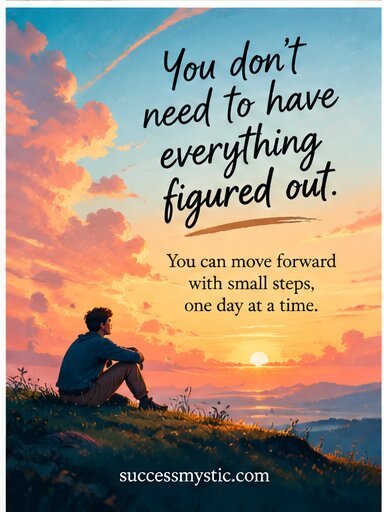
Nobody has every answer, and you don’t need to either.
You’re allowed to make mistakes.
You’re allowed to reconsider your plans.
You’re allowed to learn something new and realize that an old belief no longer fits.
Life is a continuous learning experience.
The goal isn’t to eliminate uncertainty completely.
It’s to become more comfortable making thoughtful decisions with the information you have, while remaining open to adjusting your course.
You can take meaningful steps forward without knowing exactly where every road will lead.
Try this today: Identify one situation where you’ve been waiting for complete certainty. Ask yourself what small, reasonable step you could take with the information currently available.
Remember: You can move forward without having the entire journey mapped out.
24. Slowing Down Isn’t the Same as Giving Up
We live in a culture that often celebrates constant movement.
Keep working. Keep improving. Keep pushing. Keep achieving.
And while determination can help us accomplish meaningful goals, it can also become exhausting when we never allow ourselves to slow down.
Sometimes, we interpret taking a break as losing momentum.
We worry that if we pause, we’ll fall behind.
But resting and giving up are not the same thing.
You can remain committed to a goal while adjusting your pace.
You can take a weekend off without abandoning your ambitions.
You can recognize that your energy is limited and make choices that help you sustain your efforts over time.
In fact, slowing down can sometimes provide the perspective needed to make better decisions.
You may notice an easier approach, reconsider an unnecessary commitment, or remember why the goal mattered in the first place.
Progress doesn’t always require maximum speed.
Try this today: Look at your current schedule and identify one activity you can simplify, postpone, or approach at a more manageable pace.
Remember: Moving slowly is still moving.
25. When Your Mind Is Racing, Make Space to Listen to Yourself
Have you ever found yourself caught in an endless cycle of “what if” questions?
What if something goes wrong?
What if I make the wrong decision?
What if things don’t work out the way I planned?
When we’re worried, our minds can jump between possible problems until everything begins to feel urgent.
In those moments, it can be difficult to distinguish a realistic concern from a fear-driven assumption.
That’s why creating a little mental space can be helpful.
You don’t have to respond to every worried thought as though it’s a fact.
Sometimes, taking a walk, writing in a journal, or spending a few quiet minutes reflecting can help you understand what you’re actually concerned about.
Ask yourself what you know, what you’re assuming, and what remains uncertain.
Your intuition and personal values can offer useful guidance, but they work best alongside thoughtful consideration of the facts.
You don’t need to silence every worry or force yourself to feel calm.
You can simply create enough space to respond more intentionally.
Try this today: When you notice yourself overthinking, write down the concern and separate it into three categories: what I know, what I’m assuming, and what I can do next.
Remember: Not every thought needs an immediate reaction.
How to Practice These Life Truths Every Day
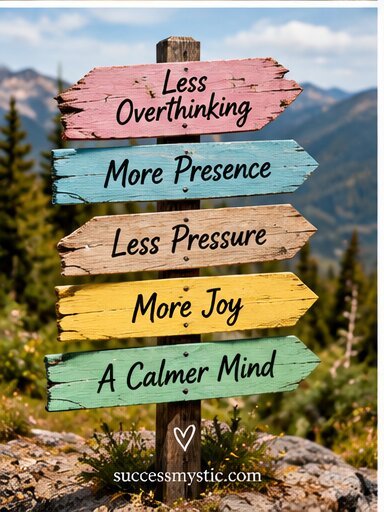
Reading an inspiring reminder can feel comforting.
But the real value comes from finding small ways to apply it in everyday life.
You don’t need to completely transform your routine or adopt every lesson at once.
Start with these five simple practices.
1. Begin Your Morning With One Intention
Before checking your phone or diving into responsibilities, take a moment to decide how you’d like to approach the day.
Maybe you want to be more patient.
Maybe you want to stop comparing yourself with others.
Maybe you simply want to make time for rest.
Choose one intention that feels relevant to your current circumstances.
2. Notice When You’re Being Too Hard on Yourself
Pay attention to the language you use when something goes wrong.
Are you criticizing yourself for a normal mistake?
Are you expecting yourself to accomplish more than is realistically possible?
When you notice harsh self-talk, try replacing it with a more balanced perspective.
You can acknowledge a problem without attacking yourself.
3. Create Small Moments of Calm
Inner peace doesn’t have to involve an elaborate morning routine or hours of meditation.
It might be a few minutes of quiet before work.
A short walk without your phone.
A relaxed conversation.
Or simply enjoying a meal without multitasking.
Small pauses can help you reconnect with the present moment.
4. Practice Gratitude Without Ignoring Difficult Feelings
Gratitude doesn’t mean pretending everything is perfect.
You can acknowledge a difficult day while appreciating something good that happened during it.
Try identifying one thing you’re thankful for each evening.
It could be a person, an experience, a comfortable moment, or something you managed to accomplish.
The goal isn’t forced positivity.
It’s developing a more balanced view of your life.
5. Choose One Life Truth to Focus on Each Week
Instead of trying to remember all 25 lessons, choose one that feels particularly meaningful.
Write it somewhere you’ll see it.
Reflect on how it applies to your current situation.
Then choose one small action that supports it.
For example, if you’re focusing on boundaries, practice saying no to an unnecessary commitment.
If you’re focusing on presence, spend more time enjoying ordinary experiences without distractions.
Over time, these small actions can become habits that support a more peaceful and intentional life.
Final Thoughts: Inner Peace Is a Practice, Not a Destination
Here’s something worth remembering.
You don’t have to become a completely different person to experience more peace and happiness.
You don’t need to fix every problem, achieve every goal, or convince everyone to understand you.
Sometimes, meaningful change begins with something much smaller.
Giving yourself permission to rest.
Choosing not to compare your journey with someone else’s.
Letting go of an old expectation.
Appreciating an ordinary moment.
Or simply speaking to yourself with a little more kindness.
Life will continue to bring challenges, disappointments, unexpected changes, and difficult decisions.
These 25 life truths won’t make those experiences disappear.
But they can serve as reminders that you have choices in how you respond, what you prioritize, and how you care for yourself along the way.
Inner peace isn’t about having a perfect life. It’s about learning to find steadiness, meaning, and moments of joy within the life you’re living.
You don’t have to master every lesson today.
Start with one.
And when life gets overwhelming again, come back to the reminders you need most.
Which of these 25 life truths resonates with you the most right now? Share your thoughts in the comments. Sometimes, the reminder you need is exactly what someone else needs to hear, too.